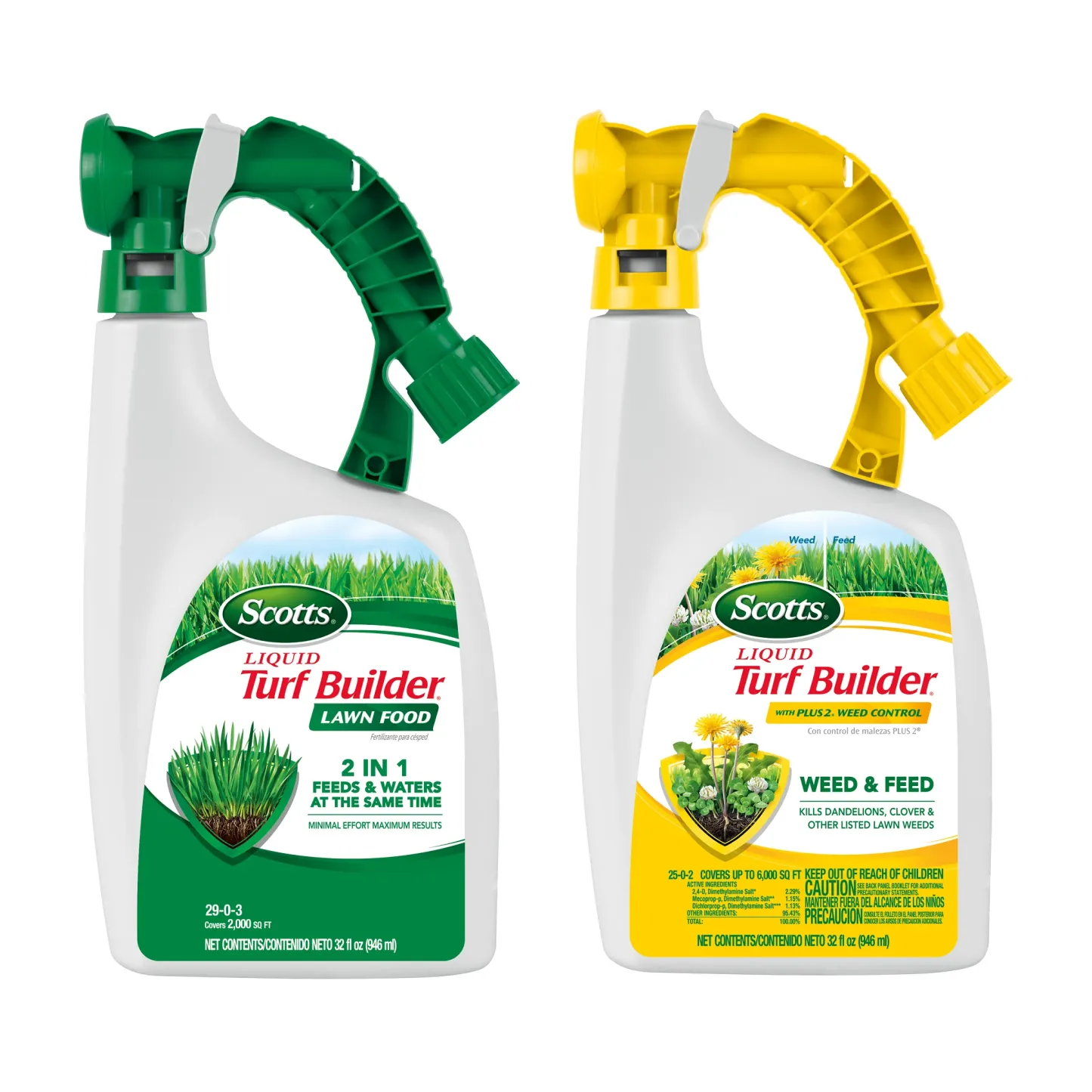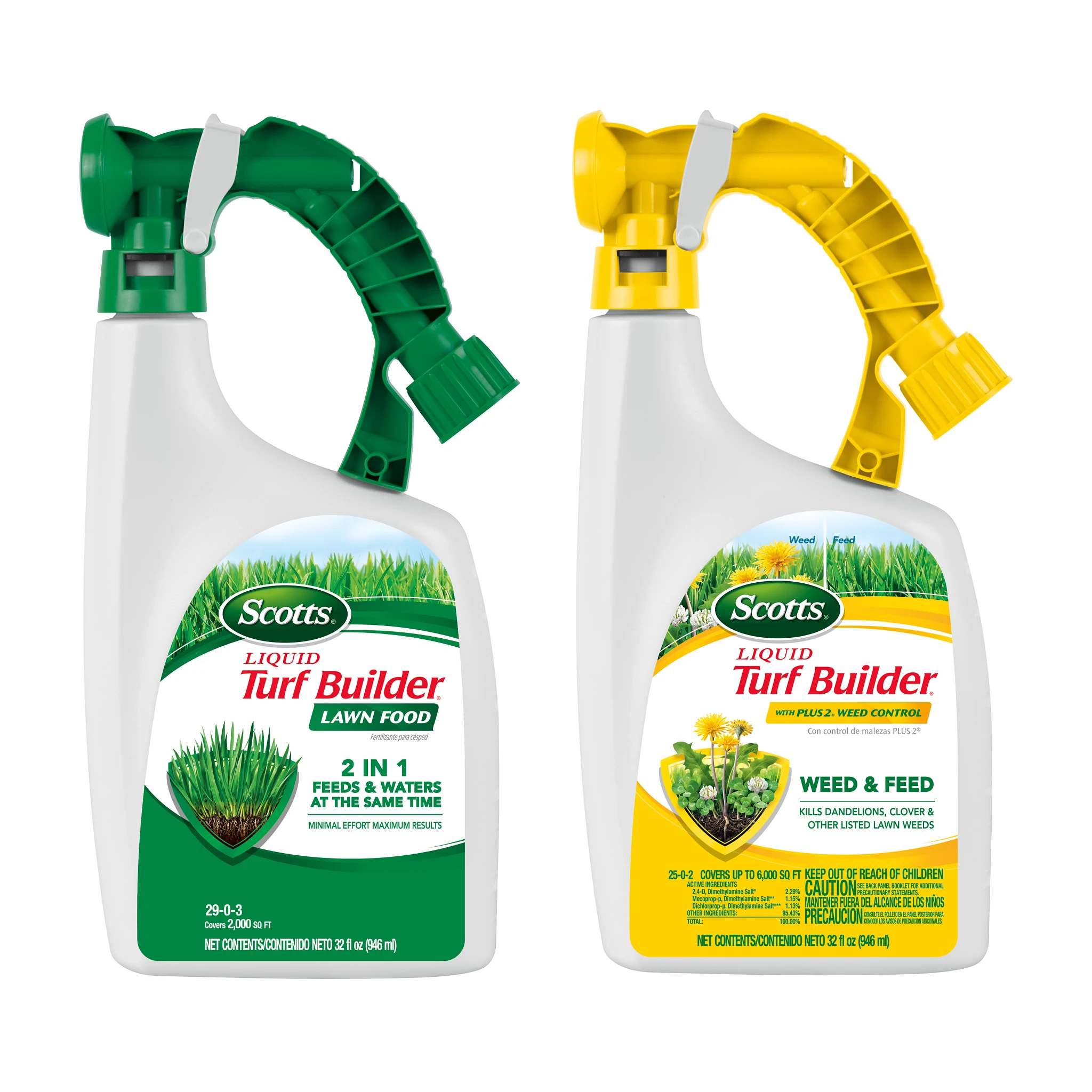
Liquid Turf Builder 2 Step Lawn Care
Overview
- Care for your lawn with Scotts® Liquid Turf Builder® 2 Step Lawn Care
- Scotts® Liquid Turf Builder® with Plus 2® Weed Control kills, dandelions, clover, and other weeds as listed (see label for complete list)
- Scotts® Liquid Turf Builder® Lawn Food feeds grass while watering
- To use these products, simply attach hose to sprayer and begin spraying
- This bundle contains one 32 oz. container each of Scotts® Liquid Turf Builder® with Plus 2® Weed Control and Scotts® Liquid Turf Builder® Lawn Food
SPECS AND DETAILS
Product Labels
- This is not the product label. Always read and follow the product label before use.
- Safety Data Sheets can be found at scottsmsds.com
Description
Simplify your lawn care with Scotts® Liquid Turf Builder® 2 Step Lawn Care. These liquid lawn care products make lawn maintenance as easy as watering the yard! Scotts® Liquid Turf Builder® with Plus 2® Weed Control controls common weeds including buckhorn, chickweed, clover, dandelion, ground ivy, henbit, knotweed, lambsquarters, oxalis, pigweed, plantain, poison ivy, ragweed, spurge, and other broadleaf weeds as listed, all while giving your lawn a boost of nitrogen. Use this product when weeds are actively growing. This product is for use on Bluegrass, Fescue, Ryegrass, Bahiagrass, Common Bermudagrass, Centipedegrass, and Zoysiagrass. One 32 oz. container of ready-to-spray Scotts® Liquid Turf Builder® with Plus 2® Weed Control covers up to 6,000 sq. ft. for warm season grasses or 4,000 sq. ft. for cool season grasses. Scotts® Liquid Turf Builder® Lawn Food is a ready-to-spray liquid fertilizer that contains the feeding power lawns need for great results. This lawn care product may be used on any grass type. Apply when grass actively growing. One 32 oz. container of Scotts® Liquid Turf Builder® Lawn Food covers up to 2,000 sq. ft. of lawn.
STEP BY STEP INSTRUCTIONS
How to Use
To apply Scotts® Liquid Turf Builder® products:
- Connect: Shake well before using. Connect sprayer to hose. Turn on water. Extend hose to farthest area of the measured area to be treated.
- Spray: To begin spraying, point nozzle in the direction you want to spray. Slide thumb activation switch forward to ON position. Spray evenly over measured area.
- Finish: To STOP spraying, slide thumb activation switch backward of OFF position. Turn off water. Relieve water pressure by sliding thumb switch to WATER position until water slows to a drip. Then, slide switch back to OFF position. Disconnect sprayer from hose.
WHEN AND WHERE TO USE
Where Not to Use
- Do not apply Scotts® Liquid Turf Builder® with Plus 2® Weed Control to St. Augustinegrass, Buffalograss, dichondra, lippia, or desirable clovers. Do not apply products near water, storm drains, or drainage ditches. Do not apply if heavy rain is expected. Apply these products only to your lawn.
When to Apply
- Do not apply when temperatures exceed 85°F.
How Often to Apply
- We recommend four annual feedings to your lawn per year: one each in early spring, late spring, early fall, and late fall. Do not make more than 2 applications of Scotts® Liquid Turf Builder® with Plus 2® Weed Control per year.
SPECIAL INSTRUCTIONS
Watering Tips
- If lawn needs watering, water thoroughly 24 hours before application. Do not water for 48 hours after applying Scotts® Liquid Turf Builder® Plus 2® with Weed Control as watering will wash off weed killer material.
What time of day should I apply liquid fertilizer?
We typically advise applying fertilizer in the morning or evening. It's the easiest time to do yard work and give your lawn a chance to soak in nutrients before or after the warmer temps of the afternoon arrive.
Can you use too much liquid fertilizer?
Whether you're using a liquid or granular product, too much fertilizer can burn your lawn. Not to worry, though. As long as you follow label directions, you'll be helping (and not harming) your lawn.
Weeds Controlled
Scotts® Liquid Turf Builder® Plus 2® with Weed Control controls buckhorn, chickweed, clover, dandelions, ground ivy, henbit, knotweed, lambsquarters, oxalis, pigweed, plantain, poison ivy, ragweed, spurge, and other broadleaf weeds.